


Over the past five decades, today’s guest has navigated an incredible intersection of economics, politics, and finance.
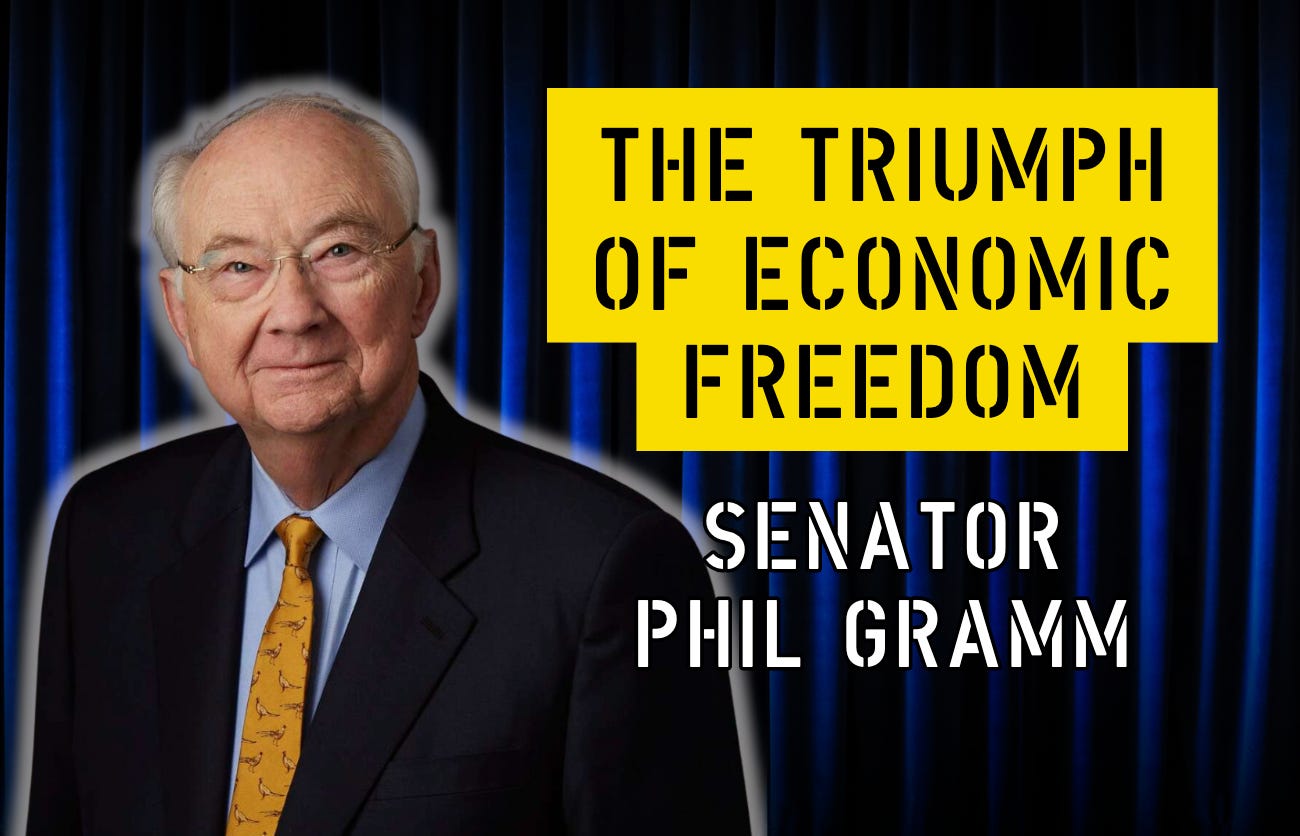
Phil Gramm is an economist who served 24 years in Congress, including three terms as a United States senator from Texas and as chairman of the Senate Banking Committee. He later spent years in investment banking and now serves as a senior fellow at the American Enterprise Institute. He’s also the co-author of the book The Triumph of Economic Freedom: Debunking the Seven Great Myths of American Capitalism, which seems particularly well-timed for our current moment.
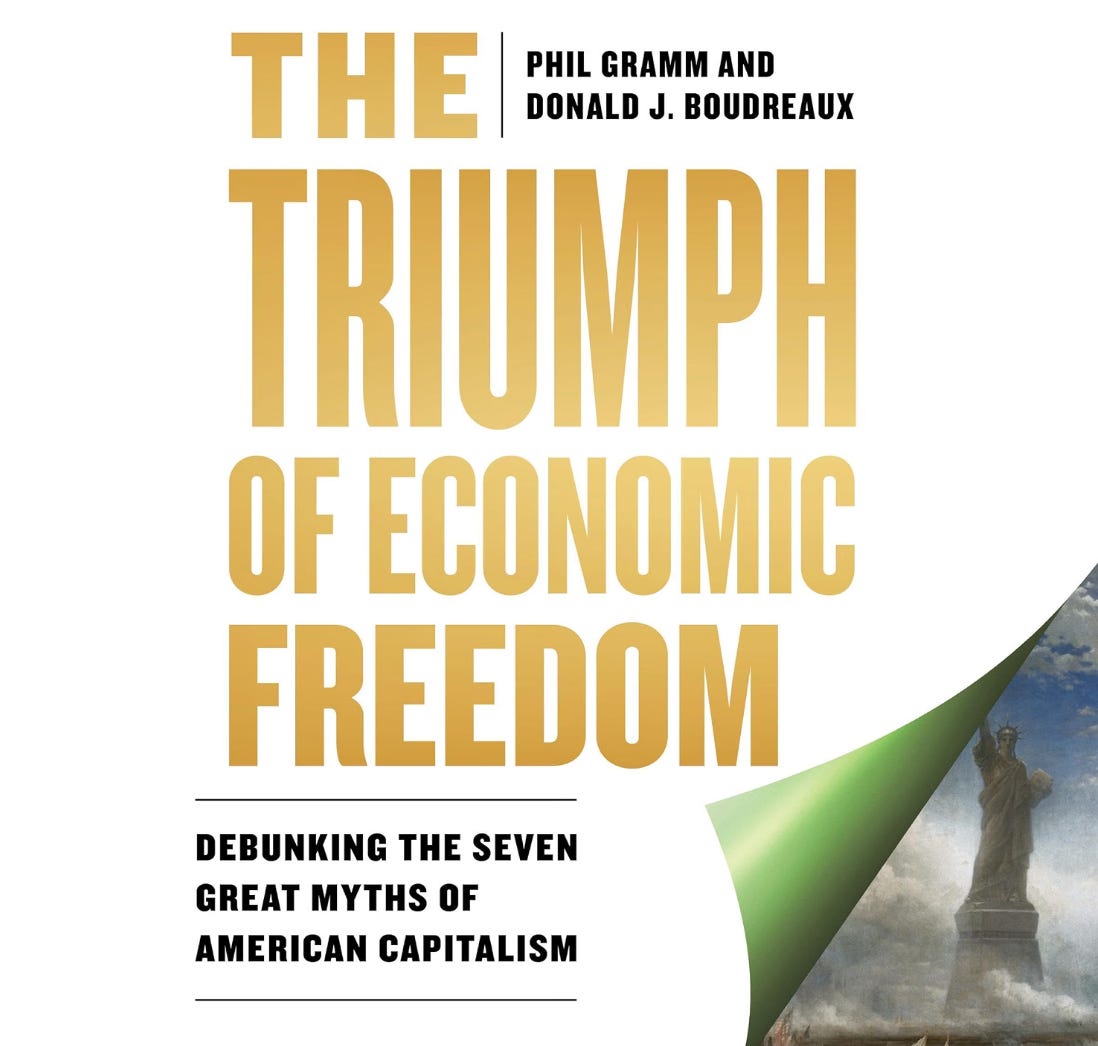
I was thrilled to talk to Senator Gramm about his career, the misunderstood causes of the Great Depression and the 2008 Financial Crisis, and how alleged rates of inequality and poverty plummet when you factor in taxes on the affluent and the trillions in entitlements received by low-income households.

Senator Gramm entered Congress in 1979 during the Carter administration and served in the Senate through 2002, under President George W. Bush. Since he was a primary co-author of the 1985 Gramm-Rudman-Hollings Balanced Budget Act, I was most interested to hear his take on the federal government’s $40 trillion in debt. Spoiler alert: it won’t end well!
I hope you enjoy this chat — I sure did.


