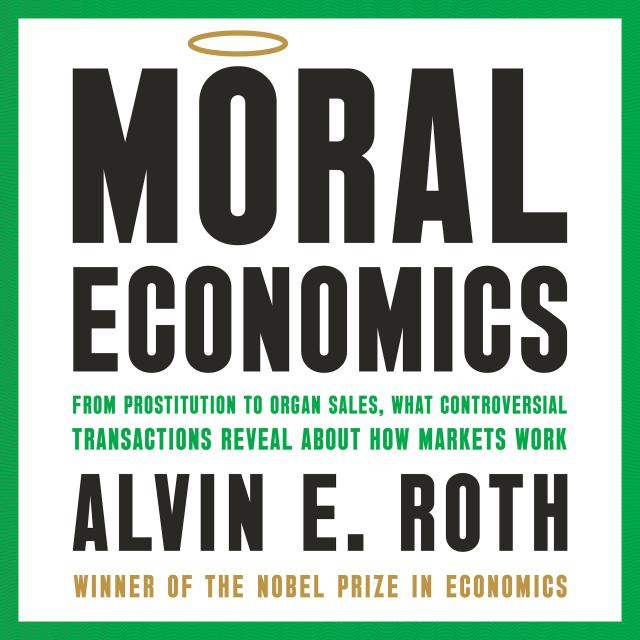
This week, I sit down with Dr. Alvin Roth, Nobel Prize-winning economist, Stanford professor, and author of Moral Economics: From Prostitution to Organ Sales, What Controversial Transactions Reveal About How Markets Work. Al lays out why so-called repugnant markets, e.g. those for kidney sales, prostitution, or horse meat aren't moral failures so much as trade-offs. He argues we should judge controversial markets by their real-world consequences instead of instinct alone. We cover:
Why it's easier to buy heroin than hire a hitman,
Iran's legal kidney market versus America's black market,
Winners and losers of rent control in New York,
Why I can’t get a horse meat hamburger in California, and
What a real accounting of scarcity and trade-offs actually looks like.
Get tickets to see Paul in Sarasota, Florida here.
Follow Paul on Instagram here and on X (i.e. Twitter) here.
Rate and Review Reasonably Happy here.
Timestamps:
00:00:00 Trailer
00:01:07 Intro
00:03:48 What market design actually means
00:06:57 Markets are better at producing efficiency than equality
00:10:08 What makes a transaction “repugnant”
00:11:45 Same-sex marriage as the textbook repugnant transaction
00:15:45 Why it’s easy to buy drugs but nearly impossible to hire a hitman
00:17:32 Iran’s legal kidney market and America’s black-market problem
00:22:10 The case against price-gouging bans, from Sydney to snow shovels
00:27:07 The real winners and losers of rent control
00:28:12 California’s ban on horsemeat, and the loophole New York doesn’t have
00:35:59 How a PhD in operations research became a career in game theory
00:37:02 The 3 a.m. phone call that announced his Nobel Prize
00:40:40 The kidney transplant shortage and what it will take to fix it
00:41:51 Outro