


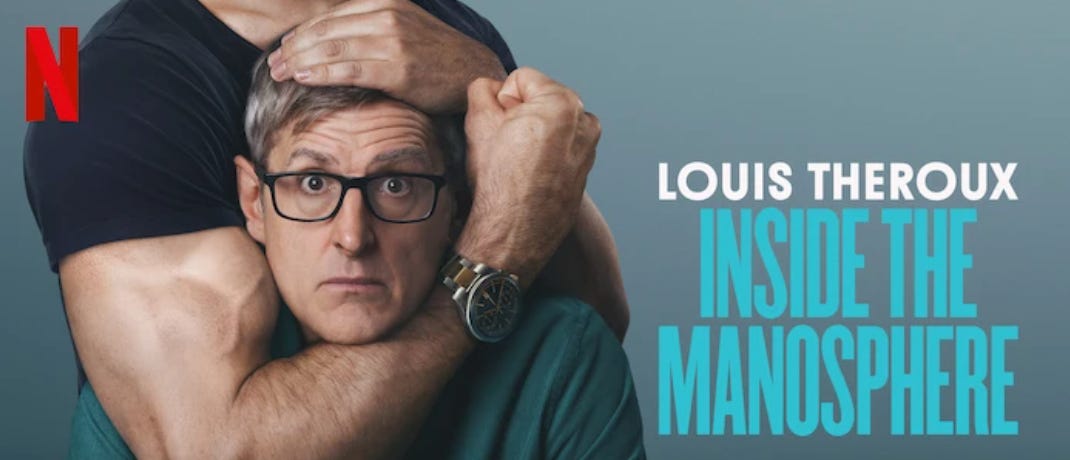
After a month of procrastination, I finally watched Inside the Manosphere, Netflix’s documentary on the rise of ultra-male influencers whose homophobic, misogynistic, and anti-Semitic content is attracting millions of young male followers.
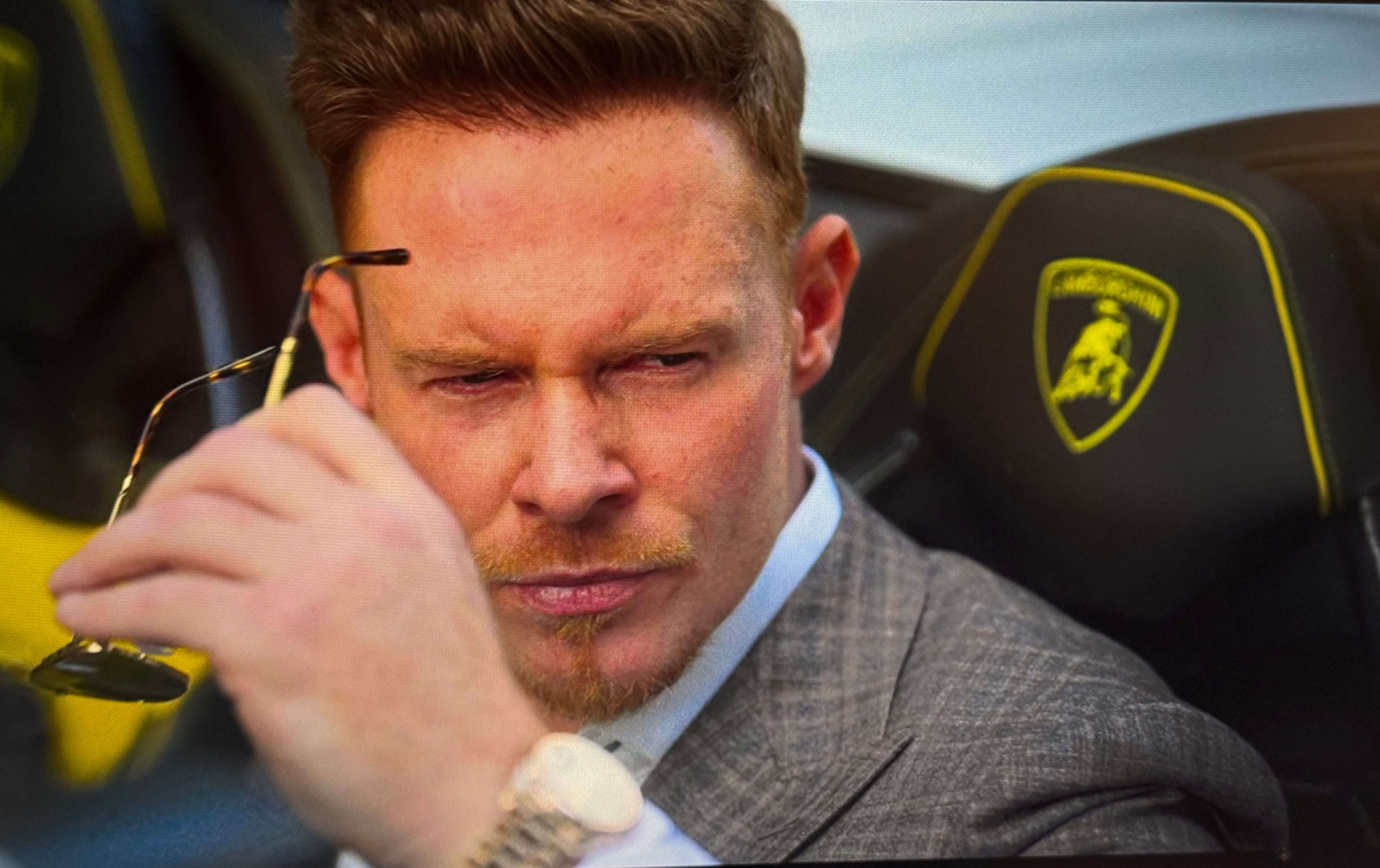
I wasn’t familiar with any of these creators going in. Unfortunately, I now know about dudes like Sneako, Myron Gaines, and Justin Waller, who drives a Lamborghini, wears bespoke suits, and brags about cheating on the mother of his children, all while presenting himself as an enviable model of modern masculinity.
Midway through the film, I got a group text from my sister, reminding my siblings and me that today would have been our late father’s 99th birthday. Thinking about him while watching these cringey creators made the contrast impossible to ignore. My dad wasn’t macho, but he was all man. The residents of the “Manosphere,” on the other hand, are sniveling little boys.
In his 2025 book, Notes on Being a Man, Scott Galloway argues that men have three core duties: to protect, to provide, and to procreate. These are not exclusively male roles, but they are essential if a man wants to be a dependable partner and father.
By comparison, these influencers mostly preen, pose, and pretend. It’s all style and no substance—a child’s fantasy of alpha masculinity, optimized for clicks and monetized through crypto, gambling, and porn. Sadly, it’s working.
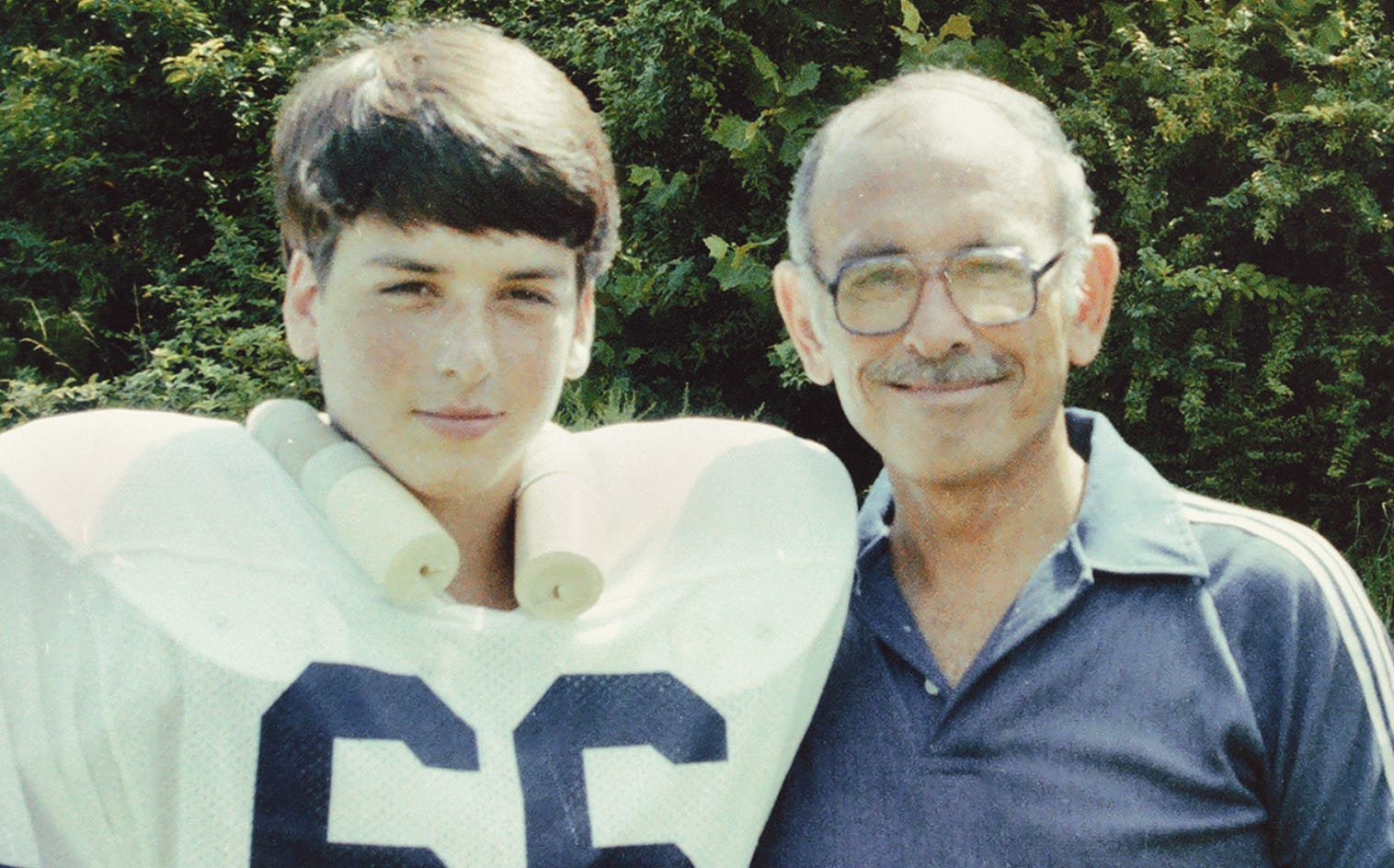
My father was the opposite. He was a provider who worked 40 years at a job he probably didn’t love to pay for Catholic school tuition, football cleats, groceries, and the mortgage. He spent very little on himself, and the idea of signaling status through cars, clothes, or watches would have struck him as absurd.
He was a protector—not physically imposing, but reliably present. Married 55 years, he remained by my mother’s side through thick, thin, and her terminal illness.
And yes, he procreated, siring six kids, but more importantly, raising them. Dad paid the bills, did the yard work, washed a few dishes, and showed up at youth sports games, plays, and graduations. Along with my gifted mother, he made sure we did chores and did not talk back, but also engaged us in conversation almost every night at the dinner table.
He never asked for credit, and he never complained. In so doing, he raised good sons and showed his daughters what they should expect in a husband.
Unfortunately, reliability and fidelity don’t trend on Snapchat. You’re never going to see an influencer bragging, “Let’s hear it for 13,000 days of not abandoning my family! Smash that LIKE button, y’all!”
But algorithms love the braggadocious douchebaggery we see in Inside the Manosphere. To his credit, Host Louis Theroux plays the perfect straight man.
At one point, Justin Waller explains the “one-sided monogamy” in his relationship—his partner remains faithful; he does not. “The woman I’m with,” he says, “doesn’t talk to other men.”
Theroux just looks at him. Justin, assuming the reporter is jealous, fills the silence with, “It stings, huh?”
Theroux reacts with the perfect, incredulous laugh. As if Waller’s situation was anything to admire.
You’re never going to see an influencer bragging, “Let’s hear it for 13,000 days of not abandoning my family! Smash that LIKE button, y’all!”
I would have liked the film to delve deeper into the societal “whys” behind the rise of performative masculinity. But Theroux makes one important, if predictable, observation: most of these influencers grew up in homes without strong male role models. Their dads were either absent or barely present.
You can see the damage. The guys are wounded, and—as bullies do—mask their insecurity by tearing down others, especially women, gays, and Jews.
I cannot imagine my father belittling the mother of his children or anyone else. Respecting other people’s dignity—regardless of their religion, ethnicity, or sexual orientation—was fundamental to maintaining his own.
Ultimately, Inside the Manosphere is less shocking than it is depressing. Social media has given bad ideas a platform and a business model. And the popularity of these broken boys will provide anecdotal evidence to those eager to prove that males are fundamentally broken.
But we shouldn’t mistake pubescent charlatans for grown men who, like my father and billions more worldwide, are reliable, kind, and loyal. They’re not flashy, but maybe their stories are the ones Netflix should be telling.
Happy birthday, Dad.
COMEDY NEAR YOU - GET YOUR TICKETS!
May 3: Charlotte - Duckworth’s - ON SALE
May 7: Private School Comedy, West Side Comedy Club, NYC
May 20: Dunwoody Country Club (members only)
May 21: Atlanta Punchline - ON SALE
May 22-23: DC Comedy Loft (tickets available soon)
June 4: Atlanta Athletic Club (members only)
June 19-20: Comedy Catch, Chattanooga ON SALE
June 25: Couples Therapy Comedy at West Side Comedy Club, NYC (tickets available soon)
I'm an 80 year old woman - retired schoolteacher - raised 3 daughters - had very good and decent husband - - and not sure why or how, but I receive your messages. (Maybe one of my daughters knows you?) Just thought I'd tell you I thought this was your best essay yet . . . perhaps because your dad and mine were very much alike. Best Wishes to you.
Good story about when Dad's were Dad and not trying to be kids buddy or big bro.
Grateful I have a Dad cut from a similar mold as yours. I caused him plenty of grief over the years with my insistence on making bad decisions.