


Grab your aprons, New Yorkers – we’re in the produce business!
This week, Zohran Mamdani announced that New York City will open five city-owned grocery stores beginning in 2027.
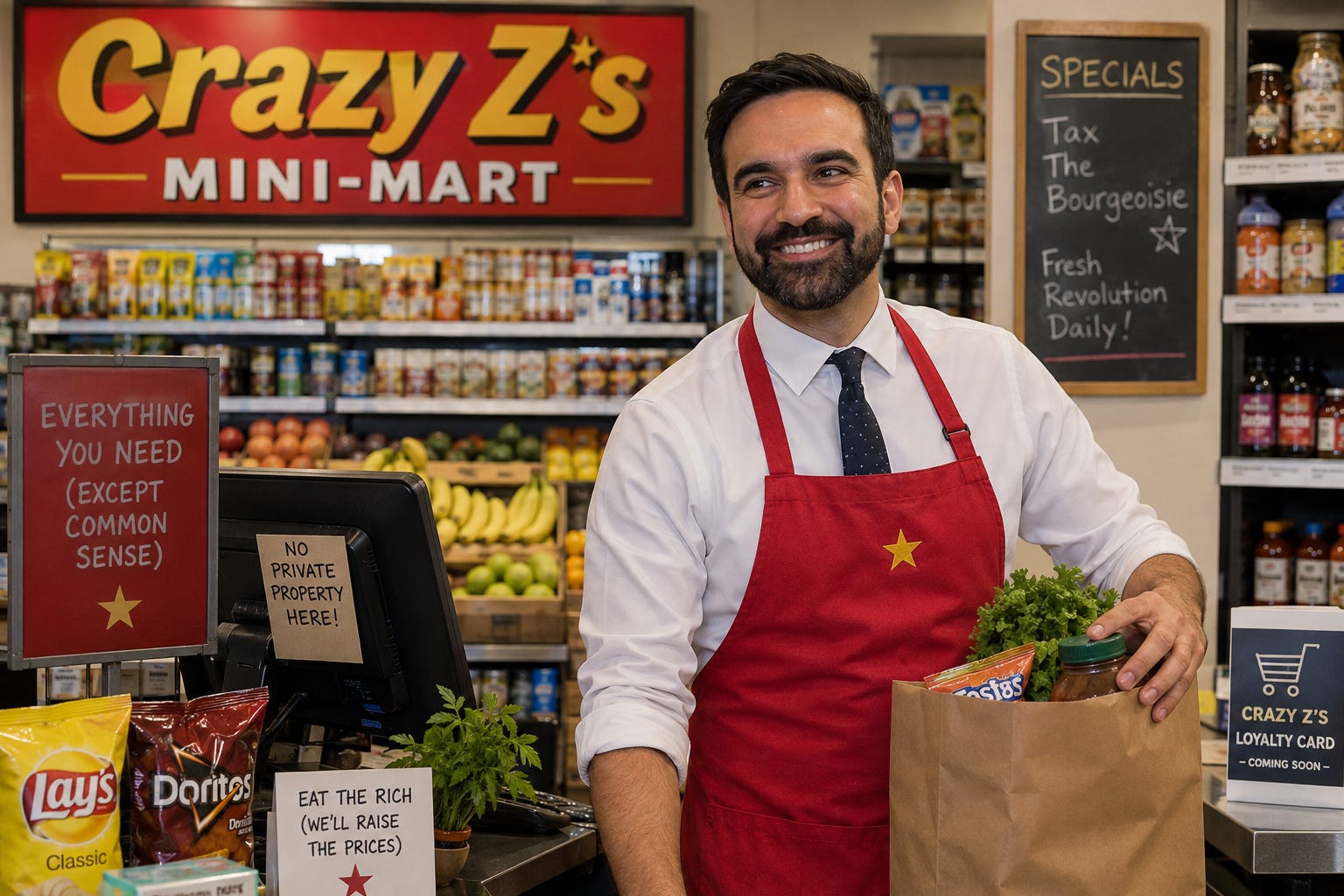
While I would normally applaud a politician keeping his campaign promise, the mayor’s plan to peddle poultry and potatoes is a dangerous distraction from far more serious problems. And it’s all part of his bigger, disturbing vision for a socialist city regime.
Government-owned grocery stores are a bad idea. For starters, they will hemorrhage cash. The initial build-out budget is $70 million, not including the cost of using city land and buildings that could otherwise generate funds for empty municipal coffers. He promises staple items at prices 30% below other retailers that survive on margins of just 2–3 percent (how’s that for “price-gouging”?). So, the stores will open tens-of-millions in the hole, then lose money on every sale. Not a great business model.
These stores will also compete with small, private businesses. Even if Crazy Z’s Mini-Marts aren’t selling prepared food, cigarettes or lottery tickets, their taxpayer-subsidized prices will penalize neighboring bodegas operated mostly by independent owners, many of whom are first generation immigrants. So much for lifting up el hombre pequeño.
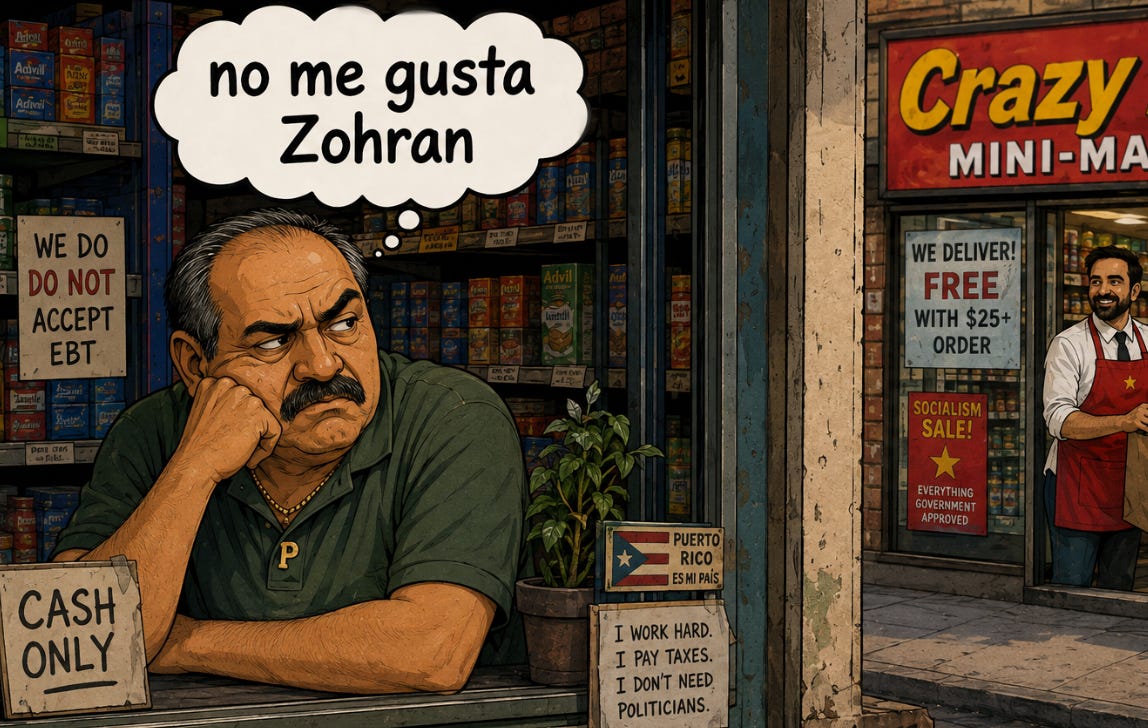
The bigger issue here isn’t the stores themselves—it’s what they stand for. In his 2026 inaugural address, Mamdani boasted, “We will prove that there is no problem too large for government to solve, and no concern too small for it to care about.”
In Mamdani’s world, every problem has the same answer: more bureaucracy.
Wife was mean to you? Call the NYC Department of Hurt Feelings
Shower drain clogged? Consult the Manhattan Bureau of Pipes and Hairballs
Your brother got a cookie bigger than yours? Text 311 and enter keywords #Inequality #MeUnhappy #NotFair
Like the man said, there’s no concern too small for government.
Yes there is! Indeed, the whole reason governments evolved was to help our predecessors deal with problems that required collective action in the form of massive resources, cooperation and coordination. If you or I could staff our own police department, pave thousands of miles of roads, or maintain a sewer system, we wouldn’t need government.
But Paul, “discounted groceries” sounds so good! Yeah, so do “hangover-free alcohol” and “zero consequence sex.”
Unfortunately, these staples are anything but cheap and, most importantly, they’re a huge distraction from far more critical projects. Since time and tax dollars are finite, every hour or dollar spent trimming the crusts off subsidized PB&J’s means less work done on more important issues.
Every grocery store press conference Zohran conducts is less time fixing schools in which 43% of students fail to meet state reading and math standards. Every million dollars squandered on public cheese shops is a million less invested in the tens-of-billions of dollars in deferred maintenance of city-owned infrastructure or emergency preparedness.
Don’t think this matters? Los Angeles reservoirs ran dry just before fires reduced 10,000 homes to ashes in one of the most catastrophic disasters in U.S. history. That’s what happens when government takes its eye off the ball.
But never mind that – let’s spend $70++ million to help New Yorkers save 60 cents on Cheerios!
If the goal were about feeding poor families, there are far better ways to do that. The city could simply send $500 gift cards to the poorest 140,000 households, meeting the same objective more efficiently while supporting existing food retailers.
However, that’s not the objective. This is about the government insinuating itself into areas of life where it doesn’t belong. It’s socialism’s matriarchal creep into citizens’ everyday life, absorbing power from individuals toward the end of state control.
Taxes go up. Freedom goes down. And once government gets into in your business, good luck getting it out. It’s misguided at best and breathtakingly arrogant at worst.
We should expect much more of it in the future.
WHAT DO YOU THINK?
Bravo. This piece by Stephen Smith explaining some much easier fixes that wouldn't cost taxpayers a dime is worth reading if you haven't already: https://www.vitalcitynyc.org/nyc-grocery-cost-explained/
Paul, I spent an entire career in the Grocery store business. Almost 45 years before I retired. From sacker to Store Manager, then on to being a VP for an international Food Broker working on both the buy and sell side of the desk. I know the business and you are correct on virtually everything, although I will say that even a measly 2-3% margin is closer to 2 than it is 3. In addition to the gaping financial hole from the get-go (that they'll never get out of without being eternally propped up) just imagine the lack of upper management talent, poor store management and unmotivated store personnel...Chicago tried this...and yeah. You need grocery people to even think about attempting something like this not corrupt lifetime government bureaucrats who don't know how to buy, how to sell or how to run it. Great essay. Really enjoyed it.