


As trust in news organizations hits a historic low and audiences for independent podcasts continue to surge, a curious media observer might think to ask what’s behind these trends.
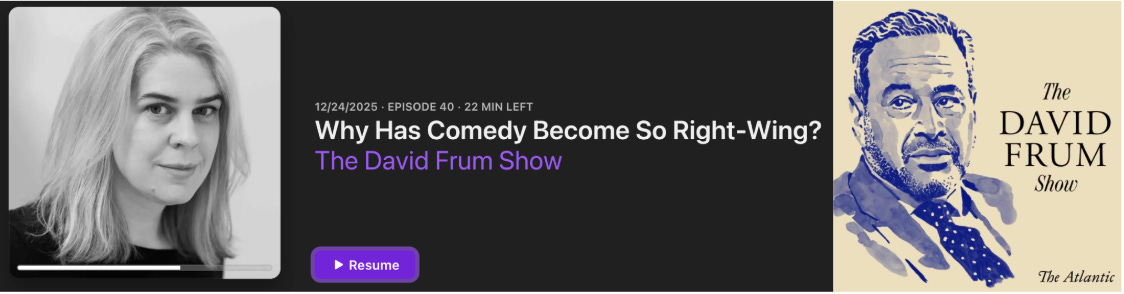
If you’re looking for a potential answer, listen to the December 24th conversation on The David Frum Show, a podcast produced by The Atlantic. Frum hosts fellow staff writer Helen Lewis on the episode, titled “Why Has Comedy Become So Right-Wing?” Their diagnosis of comedy’s supposed political bias offers a telling insight into the decline of establishment journalism and the rise of independent comedy podcasters like Joe Rogan and Theo Von.
Frum opens by asking Lewis about her trip to the Riyadh Comedy Festival, whose performers drew criticism for allegedly helping to whitewash Saudi Arabia’s human rights abuses. Lewis cites the event as evidence of a “alternative anti-woke” comedy movement.
For anyone who appreciates the sprawling diversity of voices in comedy today, the most generous way to interpret her claim is through the parable of the blind men and the elephant. Each sightless guy touches a different part of the beast and declares its overall nature solely by what he feels.
While Riyadh may have hosted a disproportionate number of older, male comedians—demographics which apparently equate to “right wing”—the sample is hardly representative of the comedy universe. It’s as if Lewis had lunch at an Olive Garden and pondered, “Why do all restaurants serve mediocre Italian food?”
The argument gets strained further when the hosts contend that comedy shows like Rogan’s and Von’s function as a gateway drug to the content of anti-Semite, conspiracy theorist, and non-comedian podcasters like Candace Owens and Nick Fuentes. Why? Because the latter sometimes use satire to obfuscate their heinous beliefs.
The Atlantic duo proceed to sneer at Rogan’s and Von’s “despicable” style and “amateurish” production values. The condescension peaks when Frum asks Lewis to advise Rogan listeners on how to become “better consumers” of such programs. As if without such advice, we would all succumb to the slippery slope—what Lewis calls a “conveyor belt”—from laughing at a Theo Von cocaine binge story to denying the Holocaust.
This is where the inverse trajectories of traditional and independent media come into focus. Rogan and Von attract huge audiences partly because they are curious, conversational, and fundamentally respectful of their audience’s intelligence. They don’t pander, and they don’t presume they know more than the listener. By contrast, Frum and Lewis seem quite sure they have all the answers.
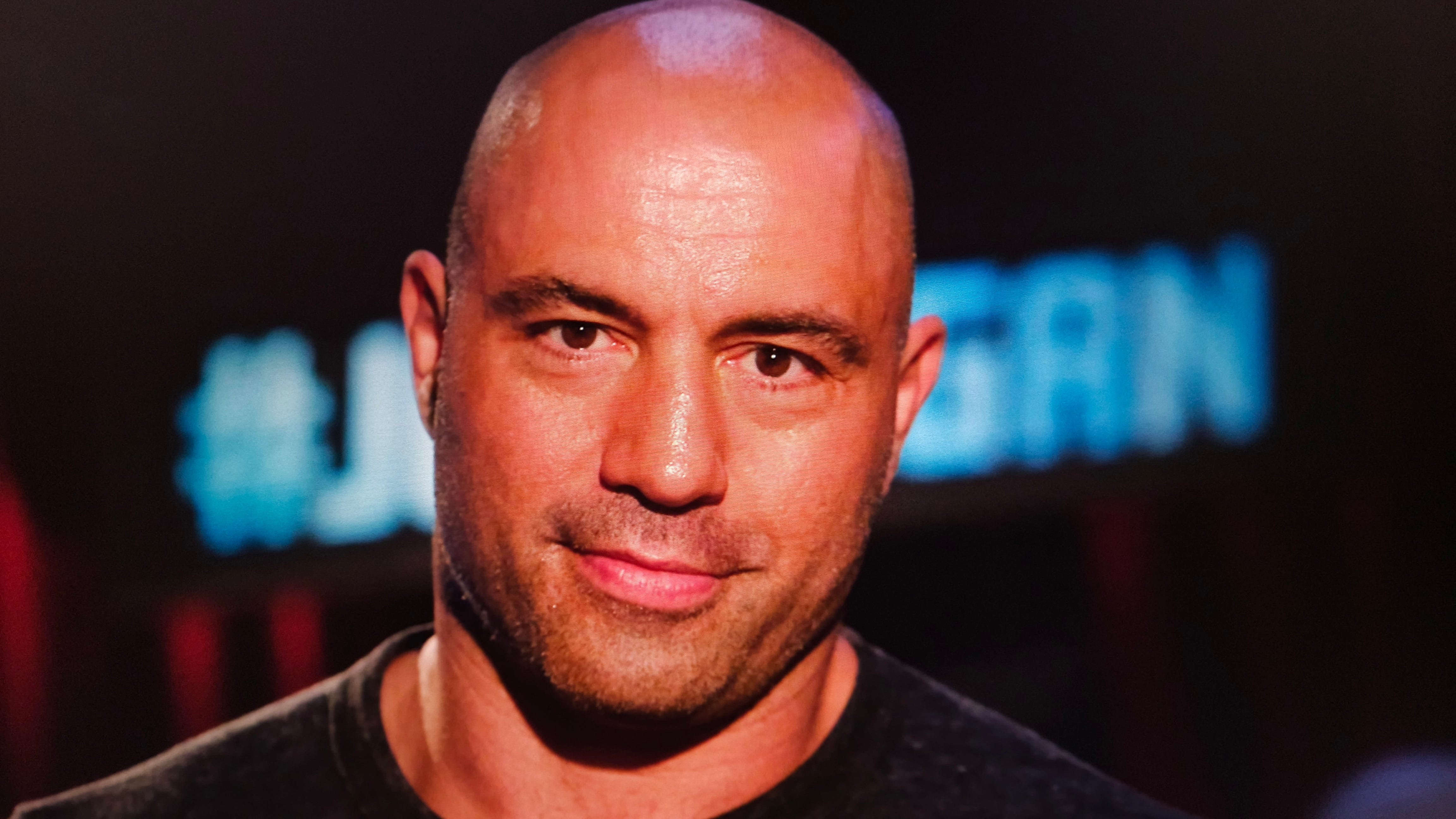
Yes, Rogan questioned the efficacy of vaccines. But the mass media have committed egregious credibility blunders of their own: dismissing the Wuhan lab leak theory, burying the Hunter Biden laptop story, and gaslighting the bejesus out of America about Joe Biden’s obvious cognitive decline, to name a few. It turns out that people don’t like being lied to.
None of this is to deny the potential of giant platforms to amplify bad ideas. The question is whether that justifies reducing a vast, heterogeneous comedy ecosystem into a single political label and conflating it with truly dangerous, bigoted people. Offering alternative theories when conventional news organizations betray their prejudice doesn’t make someone “right-wing.” It means they are justifiably skeptical of a self-serving legacy press.
This definitional confusion is the real issue—one that Frum, to his credit, raises: what exactly qualifies as “right wing”?
Is Dave Chappelle right-wing? He’s a rich, middle-aged man who performed in Riyadh and tells trans jokes. Yet his latest Netflix special skewers DOGE, Israel, Charlie Kirk supporters, and the “Orange n*&&er” in the White House.
Is Bill Maher—the archetypal ‘90s Democrat—right-wing now, simply because his former party has shifted so radically leftward?
Similarly, Rogan and Von lean right on some issues and left on many others, e.g., gay marriage and drug legalization. They’ve hosted many outspoken progressives and, notably, Rogan endorsed democratic socialist Bernie Sanders for President in 2020. None of this conforms to either political orientation.
This is precisely why these old-school columnists trash Rogan and Von by conflating them with truly reprehensible personalities. Not because they are actually Republicans, but because they are massively popular, totally unmanageable, and stealing cultural relevance from the old guard.
In a media ecosystem built on credentialism, gatekeeping, and equity language, independence looks like heresy. Humor that isn’t filtered through approved language or institutions feels dangerous.
So, “Right wing” has become less of a political descriptor and more of a disciplinary label. It no longer means “conservative.” It means noncompliant and it does not ask permission from editorial boards with their own agenda.
Comedy and comedians’ podcasts haven’t gone right-wing. They have gone off-script. And for institutions whose historical authority has depended on controlling the narrative, that’s not funny at all.
Spot on Paul. Thank you. I don’t know of anyone in politics, journalism or even my good friends (who I am mostly aligned with politically) who are perfectly balanced. We are all human. I enjoy listening and reading people like you who are willing to ask questions first before giving their opinion. People who are open to discussion and don’t always come to a conclusion that is consistently extreme one way or the other. I find it refreshing when someone who leans strongly right or left comes to a conclusion that is out of consensus for how they usually vote or lean politically. If our elected officials in DC did more of this (like they used to) our country would be better for it. Thanks Paul for trying to do this in your podcast and writing and for making me laugh along the way. Happy 2026 to all.
The fact that both Rogan and Von endorsed this President and attended his inauguration feels relevant though, no?